
Now that November is here, we're starting to think about Thanksgiving pies! That got us wondering about rolling pins, and a little digging in our collection turned up a number of them made of glass.
Although we usually think of rolling pins as wooden or even marble, glass versions were made at least as early as the 1800s. Some were used for rolling pastry, while others were decorative objects or keepsakes. Hollow examples could be filled with cold water to help keep pastry dough cool.
This colorless glass rolling pin, attributed to the Boston & Sandwich Glass Company, has a particularly interesting history. According to a note in our collections database, it was the first piece of Sandwich glass donated to the Sandwich Historical Society, founded in 1907. Although we haven't been able to confirm that distinction, it would make this unassuming object an important part of the museum's history!
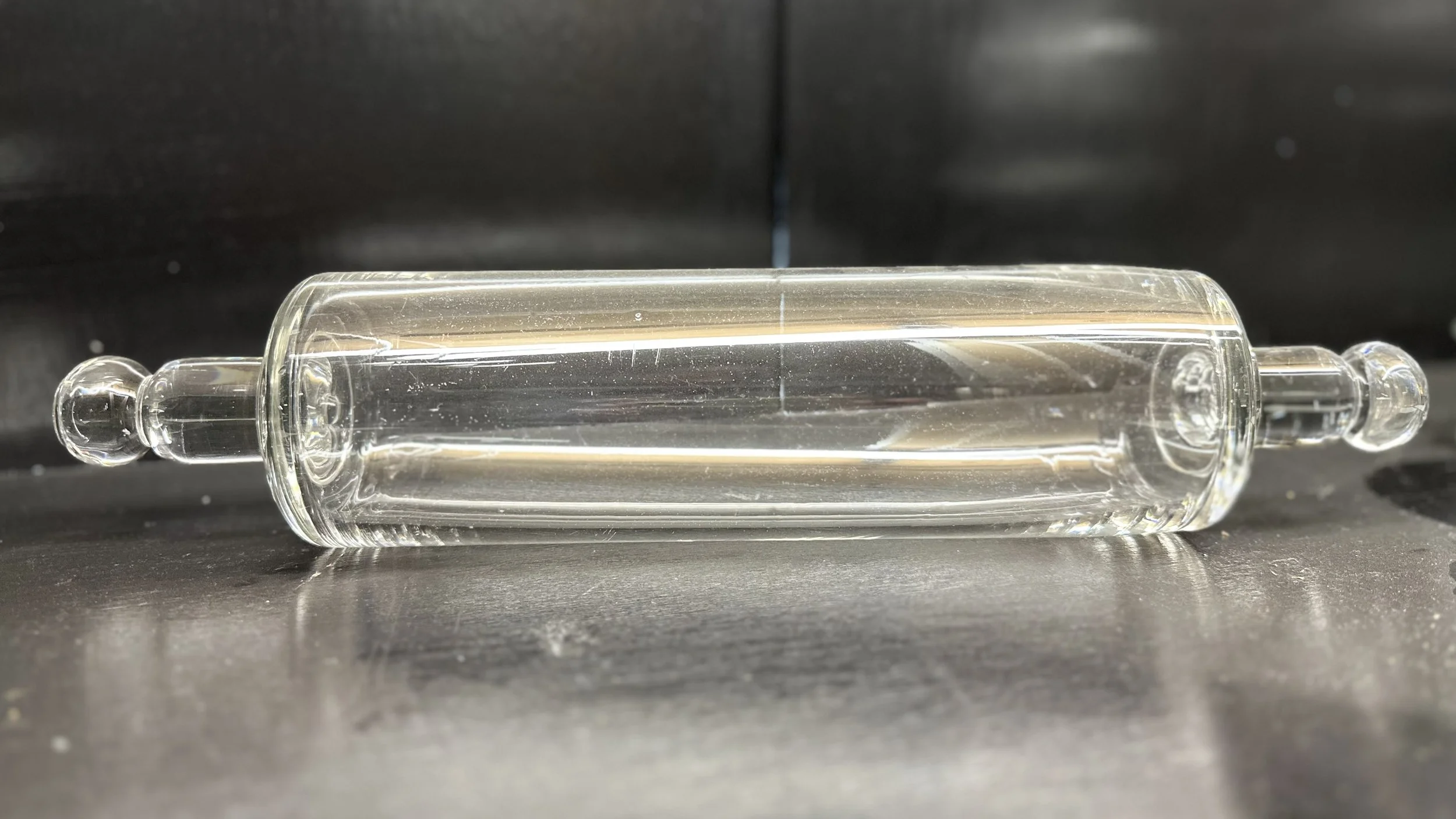
It was donated by Caroline "Carrie" Crocker (1857–1949), in 1919 according to a note in our files. Her father, James W. Crocker (1827–1923), operated a restaurant, ice cream parlor, and oyster bar for more than fifty years in Boyden's Block, once a bustling commercial building on Main Street in Sandwich. According to a historical account in our files, he knew local glassmakers and commissioned special pieces of glass for family members.
Carrie and her sister Sarah (1862–1956) were important contributors to the Museum’s collections. In 1960, the museum received a substantial collection of mostly Sandwich glass that had belonged to the two women.
As you get ready to roll out your Thanksgiving pie crusts, here's a question: Would you trade your wooden rolling pin for one made of glass?
