
Could a shiny glass ball keep something sinister from crossing your threshold?
Leading up to Halloween we’re taking a closer look at the witch balls in our collection. The tradition of hanging hollow glass spheres to ward off harmful forces goes back at least two centuries, drawing on much older beliefs about protecting the home from witchcraft, evil spirits, and ill fortune. Hung in windows or doorways, they guarded places where unwanted forces were thought to enter.
These intriguing spheres also have a local connection. The Boston & Sandwich Glass Company made examples during the nineteenth century, bringing together the glassblower’s skill and a form surrounded by folklore. The witch balls in our collection offer a chance to explore that bewitching history.
According to folklore, their gleaming surfaces could distract a witch or attract and trap an evil spirit. Some were filled with bits of thread or wool, supposedly forcing a witch to count every piece before doing any harm.
Behind these stories were serious concerns. Illness, the loss of livestock, and other misfortunes could be blamed on a neighbor’s harmful magic. Protective objects offered reassurance, and something people could do to safeguard their households.
Not every glass sphere was made or displayed for magical protection. Their beauty was reason enough to enjoy them, and the history of their decorative use is clearer than the origins of their witch-repelling reputation.
Witch balls still find their way into homes today, purchased for their beauty, their folklore, or maybe a little of both!
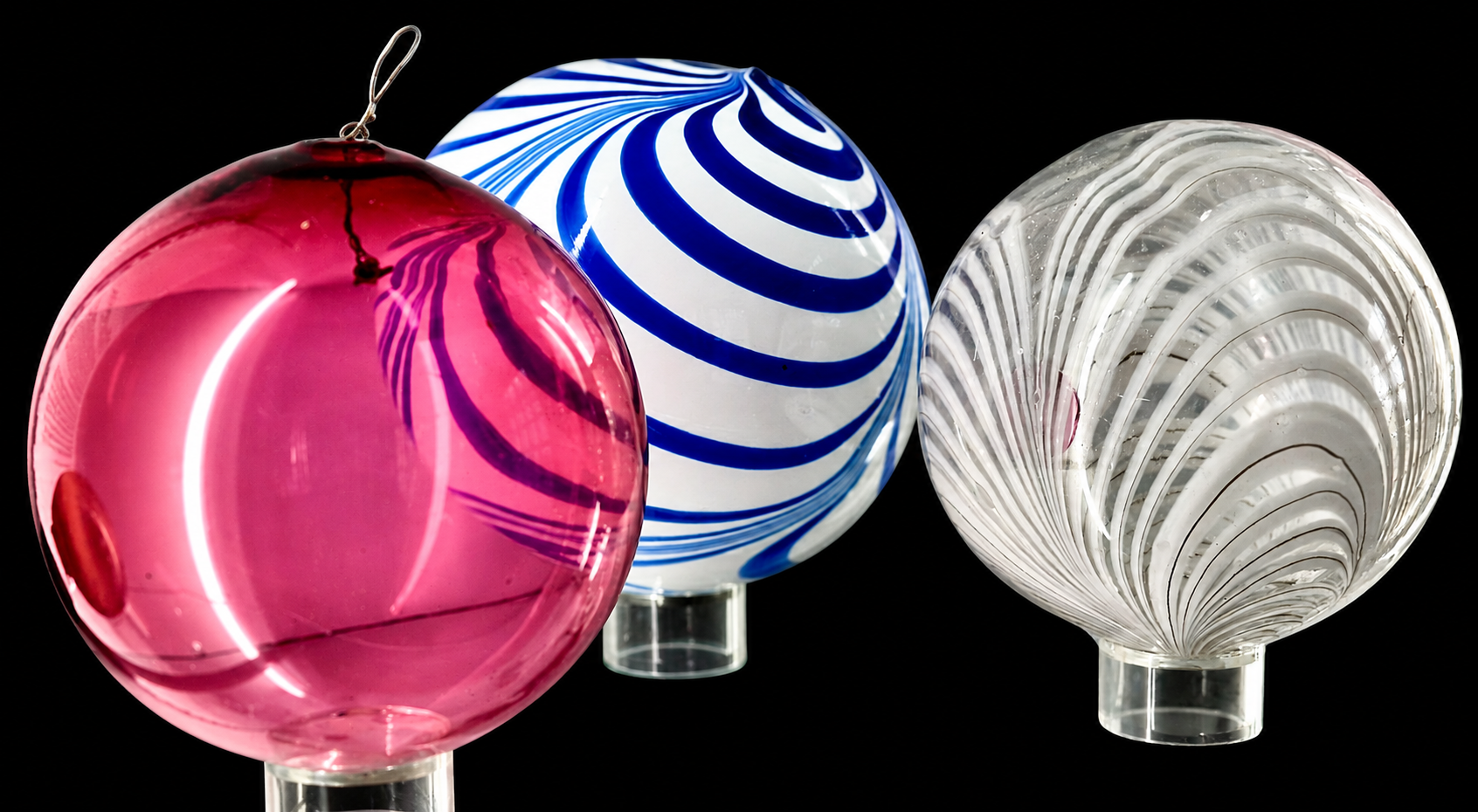
Caption: Witch Balls, attributed to Boston & Sandwich Glass Company, 1840-1860. The ball on the right was found hanging in a Sandwich barn.
