So ends this Joyful day
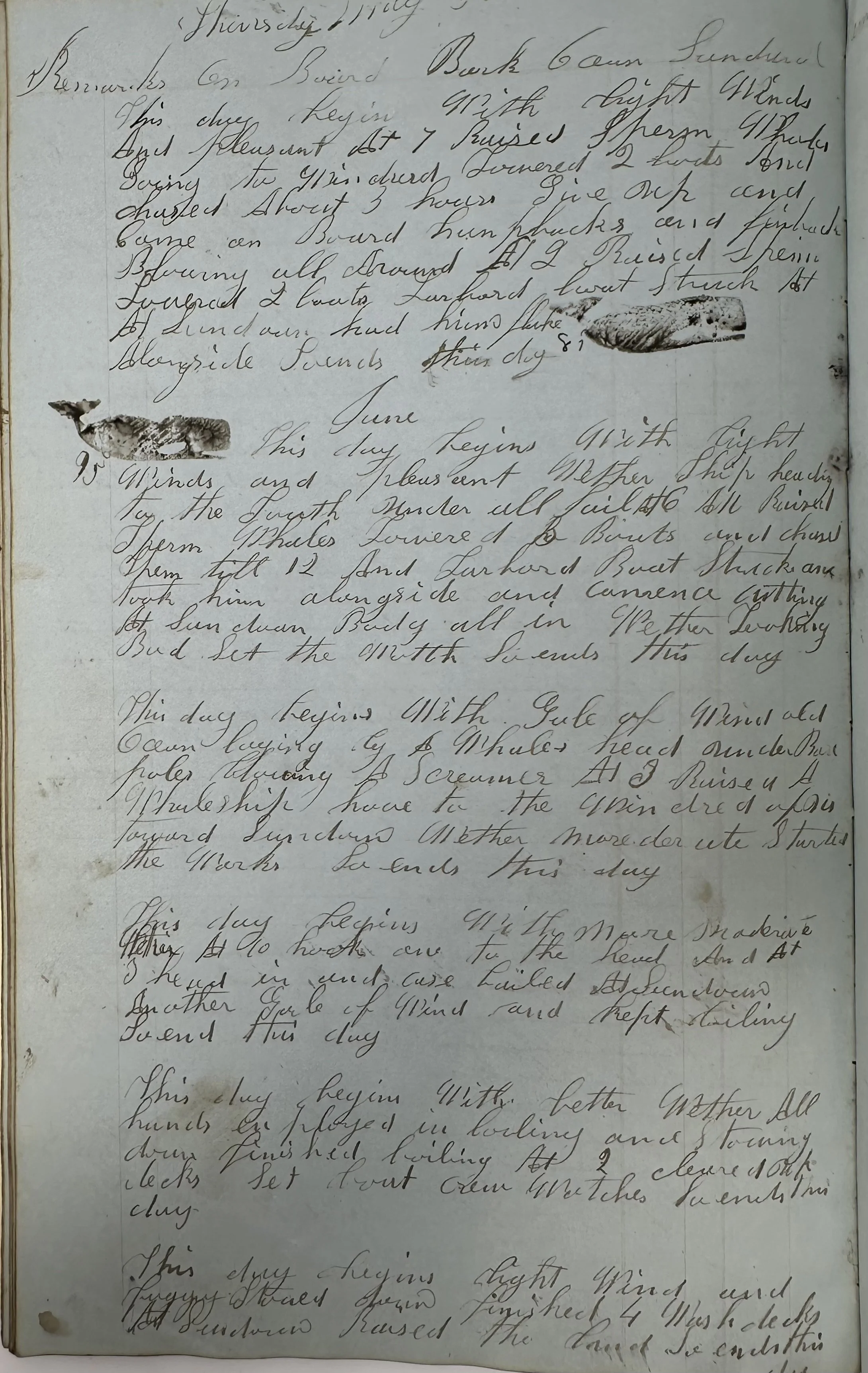
Preparing for an upcoming talk about the Museum’s 250th collections research and a display related to Moby-Dick, I’ve been exploring a handwritten journal from the whaling bark Ocean of Sandwich, kept during its 1859–1861 voyage.
This book opens a window onto the America that grew after independence. The whaling industry helped the young nation build wealth, develop manufacturing, and extend its commercial reach around the world.
Before kerosene and then electric lighting became widespread, whale oil was used to fuel lamps, and spermaceti—a waxy substance from sperm whales—was refined into prized candles. Behind that light lay an enormous network of skills and technologies: shipbuilding, navigation, barrel making, oil refining, candle making and lamp design. Better lighting extended the hours people could read, work and gather after sunset. Whale oils also lubricated machinery in a growing industrial economy.
The Ocean sailed at a turning point in lighting technology. Petroleum production was expanding, and cheaper kerosene lighting would increasingly compete with whale oil. The pages of the logbook capture people working in an established maritime industry as new energy technologies began changing its future.
I’m using AI technology to help decipher and transcribe our logbook. Most daily entries start with “This day begins…” and close “So ends this day.” Within that steady rhythm are wonderfully human details. The crew found a knife that had been sewn into a sail for fourteen months. They recovered a floating cask of rum. Throughout are glimpses of the mundane and exhausting work of operating and maintaining a ship along with storms, dangerous hunts, meeting up with other ships, and food preparation.
We get a sense of the captain’s personality, too. On March 29, 1861, when gale force winds blew the ship off course and there were no whales in sight, he signed off that day with, “So ends this Joyful day.” And the logbook is illustrated throughout with stamps of whales and small hand-drawn sketches of ships, whales, and even a barrel on the day they found the cask of rum.
Further research revealed that the Ocean’s captain was Peleg Cornell (1805-1876) who commanded the Ocean over three Atlantic whaling voyages. The Providence Public Library preserves journals attributed to him, including what seems to be a separately cataloged account of the same 1859–1861 voyage and a volume from a later voyage. Comparing the Providence journals to ours could give us different perspectives on life aboard the ship—and help fill gaps in our own volume.
Those gaps have an unfortunate but not altogether surprising explanation. Someone later turned this logbook into a scrapbook, pasting newspaper clippings over many of its pages with fragments of the captain’s writing peeking out underneath. I found reports of other whaling journals being used in the same way.
Reading this journal in the context of the 250th brings large historical questions close to home, about how Americans in the emerging nation made their living, the impact of industry and technology on their lives, and what economic growth cost both workers and the natural world. Through one Sandwich whaling vessel, we can trace the connections between Sandwich, a global industry, and the lights burning in homes across 19th-century America.