Trouble Brewing! A Sandwich Doctor and the Tea Boycott
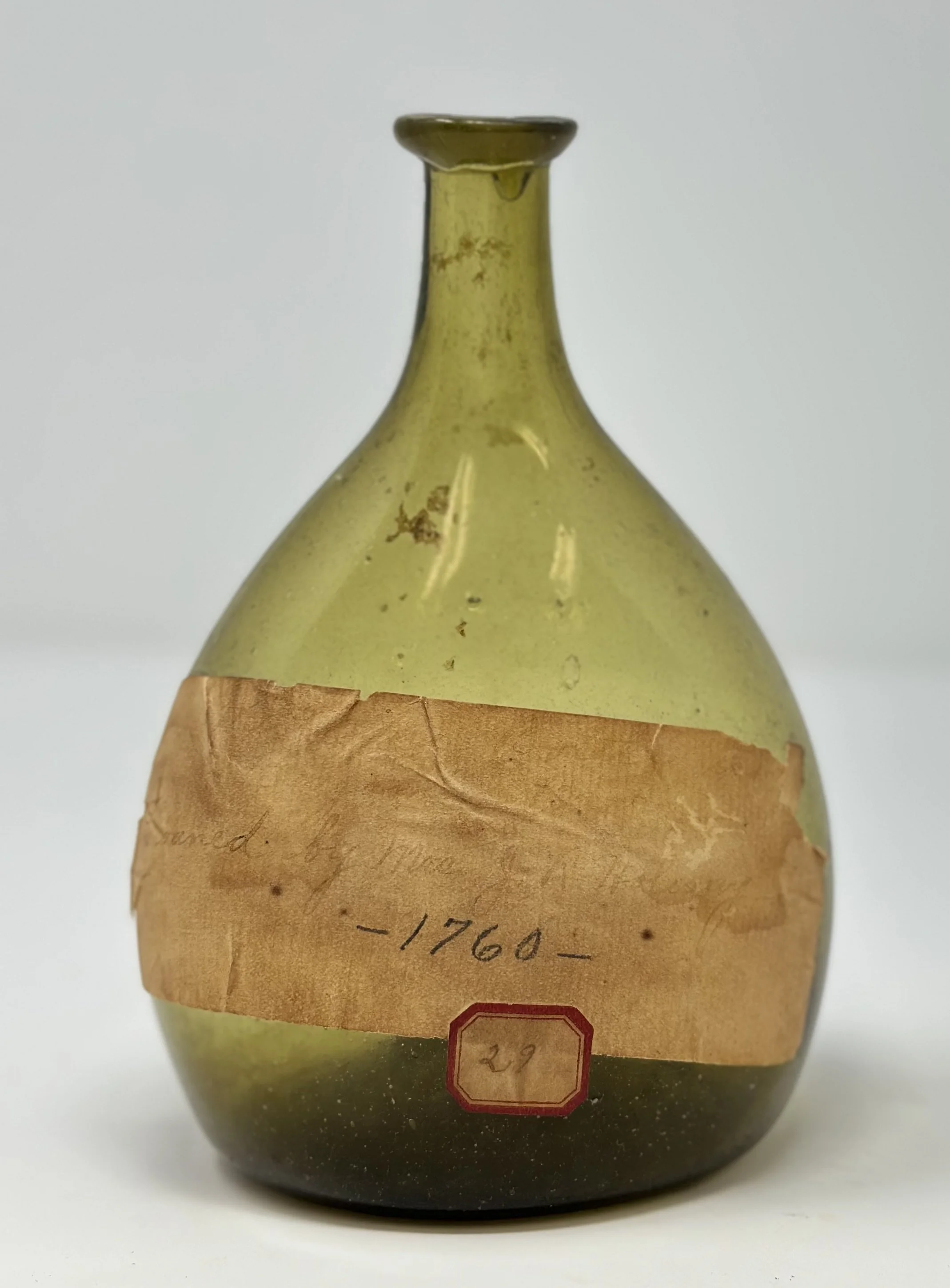
The faded label on this green glass bottle is mostly unreadable now, but according to the Museum’s catalog records it once offered a tantalizing historical clue, “Belonged to Dr. Benjamin Bourne 1760.” The bottle came to the Sandwich Historical Society through Ella Frances Holway, curator of the Sandwich Historical Society from 1907 to 1915.
As we explore our collections for America’s 250th anniversary, we’re looking more closely at the early records—and following the questions they raise.
The doctor named on the label is most likely Benjamin Bourne (1744–1827), a Sandwich physician who graduated from Harvard in 1764. Historical accounts also identify him as a seller of tea, a business that brought him into conflict with local Patriots.
The controversy reached back to the Townshend Acts of 1767, with which the British government imposed duties on goods imported to the American colonies, including glass, paper, paint, lead, and tea. Parliament repealed most of those duties in 1770 but retained the tax on tea. The Tea Act of 1773 left the existing tea tax in place while giving the East India Company advantages in selling tea to the colonies.
Colonial Patriots challenged Parliament’s right to tax the colonies without representation. On December 16, 1773, protesters carried that resistance into Boston Harbor, destroying East India Company tea in what became known as the Boston Tea Party.
The conflict played out here in Sandwich, too. In a public confession dated October 5, 1774, Benjamin Bourne acknowledged that he had continued selling tea “contrary to the general Sentiments of the Community” and promised to “not Purchase or Sell any India Teas howsoever Imported, till a final decision of the Controversy between Great-Britain and the Colonies but will in all Respects behave as a good Citizen and an inviolate Friend to the Cause of Liberty and my Country.”
By selling tea in defiance of the local boycott, Bourne had challenged a central strategy of colonial resistance: refusing British goods to exert economic and political pressure.
This bottle brings us back to the material world behind those disputes. Its early label preserves an association with Benjamin Bourne but leaves much unexplained. What does “1760” mean? That was the year Bourne entered Harvard, at age sixteen—an intriguing coincidence, although we don’t know whether the date refers to the bottle’s manufacture, his ownership, or something else. How did the bottle reach Ella Holway?
Following the clues in an old catalog record brings us from a glass bottle to a town divided by the approaching Revolution, and a reminder of how deeply that conflict reached into everyday life.